Yo! You can’t give your kid confidence. But you sure as hell can show them what it looks like.
I say we do it together.
Stop second-guessing yourself, and raise a kid who goes for it anyway. Five to ten minutes a day: an exercise for you, plus a kid-friendly way to bring it home if you want to. By day 30 you’ll have your own Konfidence Kode, and a scary goal you’ve already gone after.
I was a painfully shy kid who couldn’t say my R’s until sixth grade. If anyone talked to me, I blushed. Now I’ve built a community of over 300,000 and I speak on stages. I’ll show you exactly how, and dare you to do it with your kid.

What have you been saving for “someday”?
Carl Jung
In my work with families, I’ve found that when I build up the parent’s confidence first, the kid’s follows.
When researchers study anxious kids, the same three things keep showing up. They overestimate danger, underestimate themselves, and talk down to themselves. I saw all three in my kids. Then I saw them in me.
You: don’t go for the things you know you should.
Your kid: holds back because they’re scared, not because they can’t.
You: play smaller than you could.
Your kid: shrinks in groups when you know they can shine.
You: second-guess what you said after you said it.
Your kid: talks down to themselves out loud.
Kids of anxious parents are up to seven times more likely to develop anxiety themselves.
The same research found that when parents change what they model, kids change with them. That’s why you go first.
I started doing one-on-one clarity calls with parents who were worried about their kids. The same pattern kept showing up: a kid who talks down to themselves, stops going for the things they want, and treats every failure like a verdict.
The longer I talked with the parents, the more I heard the same things in them. They’d stopped going after their own goals. Their whole life had shrunk down to managing their kids. And failure scared them as much as it scared their kids.
So we worked on the parent first. They started having different conversations with their kids, and things at home started to change.
But not every parent can spend a few thousand dollars on one-on-one coaching. So I built the Konfidence Challenge: the same principles I use with parents, plus a distilled version of every exercise for your kid.
The goal: by the time your kid leaves your house, they trust themselves. They don’t fold under peer pressure, they don’t let a bully decide who they are, and the voice in their head is on their side.
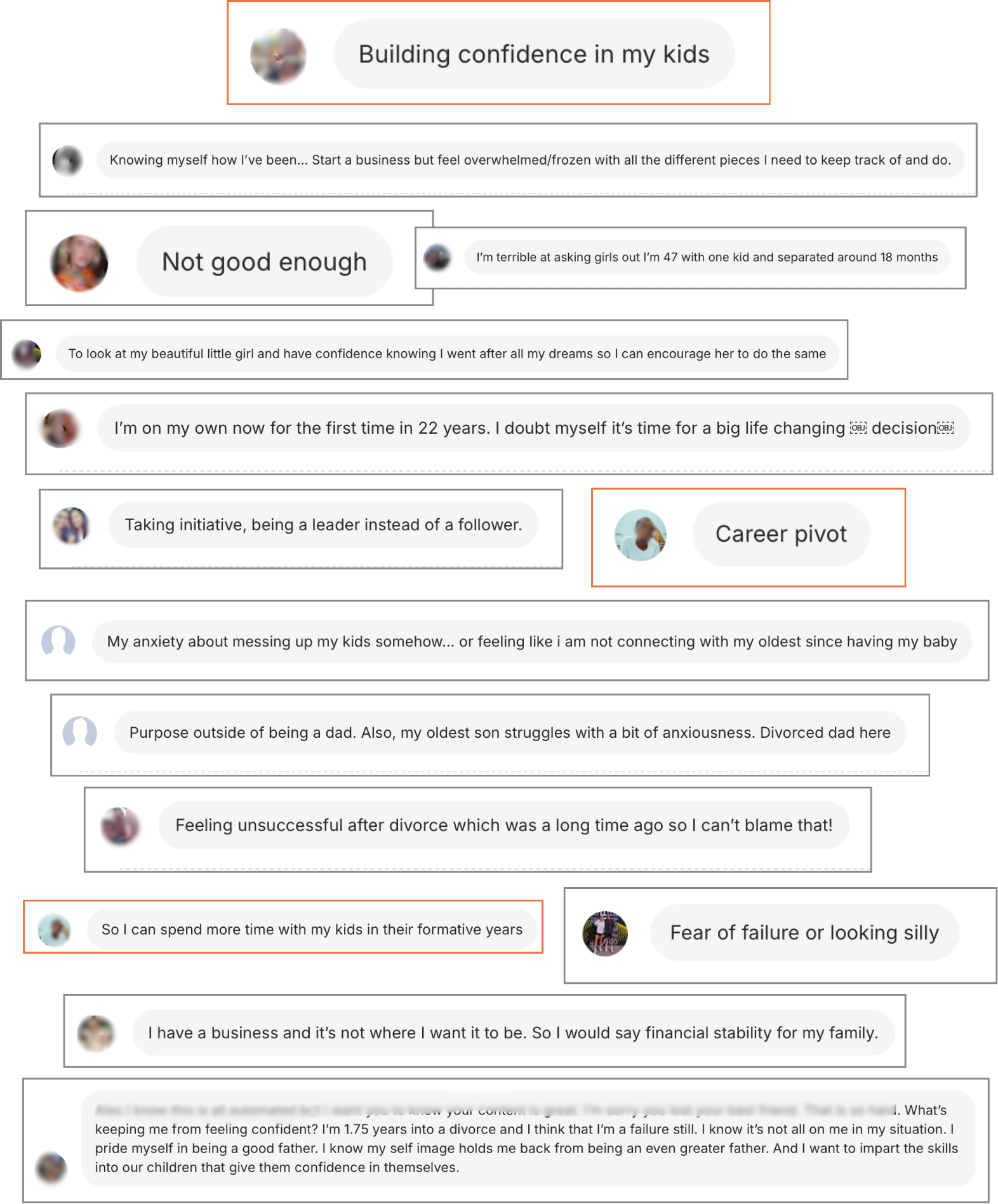
Before our last challenge, we asked the parents on the waitlist what they wanted most. These are their replies, exactly as they came in.

If one of these sounds like you, this was built for you.
By day 30, you’ll have:
You can’t be confident while a voice in your head calls you stupid all day. You’ll learn who your critic is, where it came from, and how to stop handing it to your kid.
Every time you choose comfort or compare yourself to someone else, you make a withdrawal. Every brave rep is a deposit. You’ll learn to keep the account growing, for you and your kid.
Using the science of flow, you’ll find the zone where practice feels good enough that you don’t want to stop. That’s where self-trust compounds.
Confidence built on someone else’s goals doesn’t last. You’ll set one scary goal rooted in what you actually value, so you stick with it when it gets hard.
Most of us default to too much pressure or too much protection. You’ll learn what high standards plus high support actually sounds like, and how to say it in the moment.
You can’t create confidence in your kid. Neither can I. What you can do is create an environment where confidence flourishes, and be the parent they watch go after a dream, fall, and get back up. That’s what these 30 days build.
Your kid might roll their eyes on day one. You might feel silly doing the exercises yourself. Good. That’s the part that works.
I can’t hand you a copy-and-paste template, because confidence doesn’t work that way. Some exercises will land for your family and some won’t. That trial and error is how you build your Konfidence Kode.
Thirty days won’t make anyone fearless. It will give you both proof you can do hard things, and a way to keep collecting it after we’re done.

I wrote a book, The Creator’s Call, about what I thought was the most important thing to figure out in life: your purpose. Then I watched people read it, know exactly what they were meant to do, and not change a thing.
Knowing what you’re meant to do doesn’t matter if you don’t trust yourself to go after it. Every time I’ve been stuck in my own life, it was the same thing. I was scared to fail, and I didn’t trust myself enough.
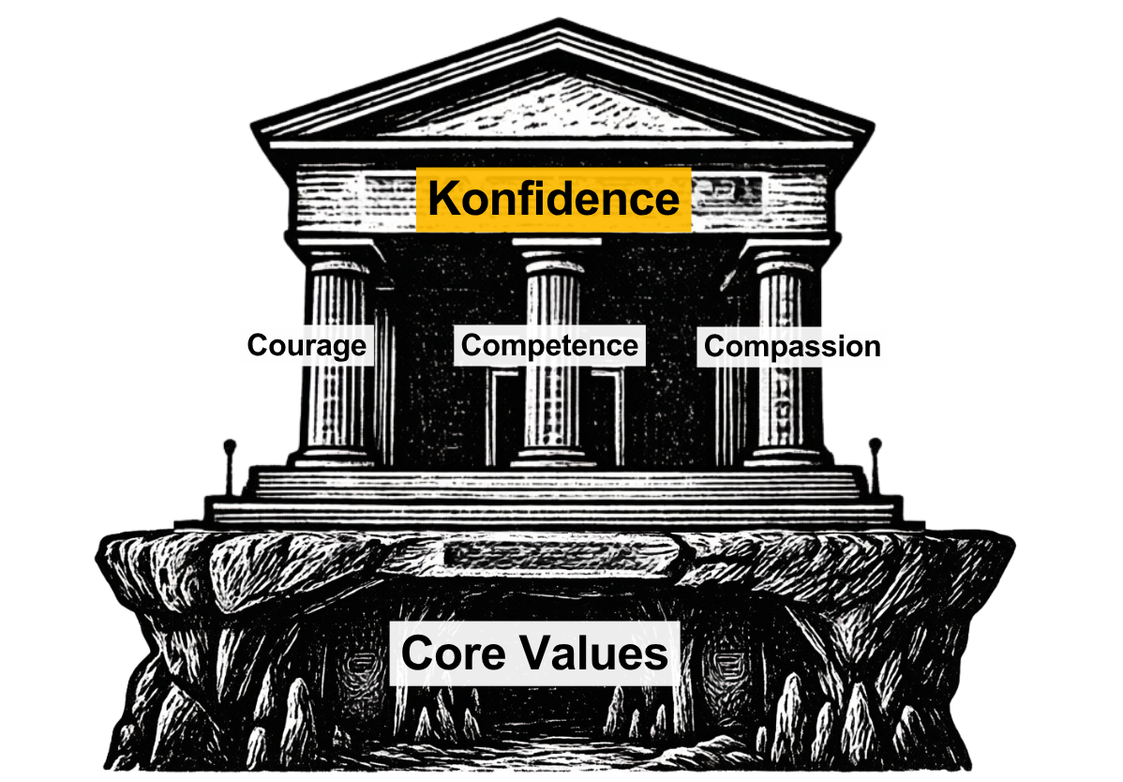
So I went deep on what self-trust actually is. I used to think confidence was liking what I saw in the mirror that morning. It isn’t, and it isn’t being certain things will work out either. It’s trusting yourself, and you can’t trust someone you don’t know. That’s Konfidence with a K.
Today I’m a single dad of three, one reel with my son hit about 3 million views, and more than 300,000 parents follow along.
Confidence isn’t a mindset. It’s what happens after you do something real and watch it actually work.
No. Every daily exercise is built for you. Each one comes with a kid-friendly way to talk about it at home, and you can use it or skip it. Plenty of people take the challenge just for themselves.
The exercises are for you, so your kids’ ages don’t limit what you get out of it. For the kid conversations, 7 and up works best. My twins are 8, and they understand most of it and enjoy it. Younger kids still get the most important part: watching you do it.
Five to ten minutes a day for your exercise. The conversation with your kid is extra, whenever it fits.
Everything lives in Circle. You’ll get access when doors open.
No. It’s skill-building, not treatment. If you or your kid are dealing with anxiety or depression that’s getting in the way of daily life, please talk to a professional. This can sit alongside that, not replace it.
The waitlist gets in first. Doors open Nov 2 with the early-bird price, and we start Monday, Nov 9.